
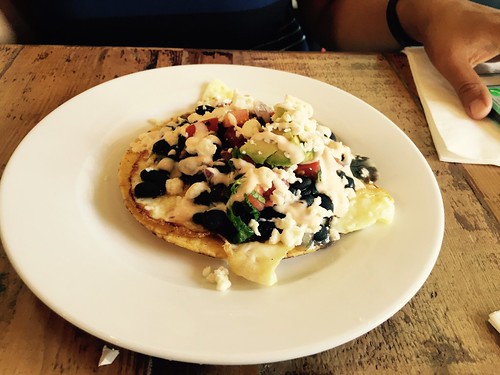
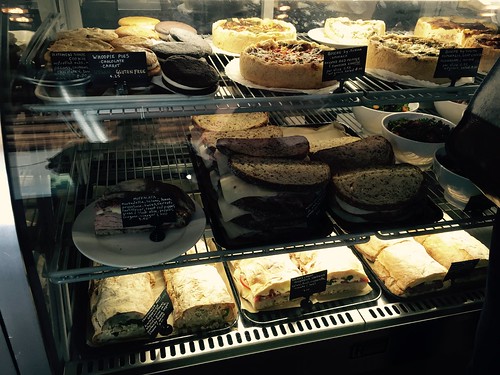
As spotted in the window of our neighborhood coffee house, KAFN.


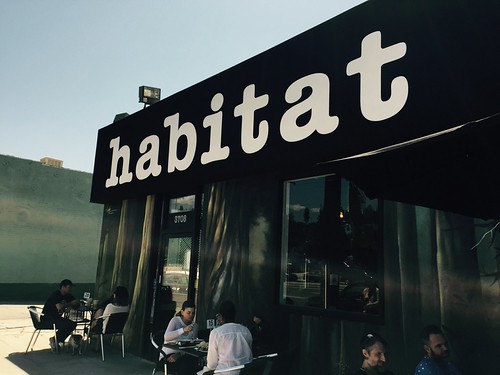
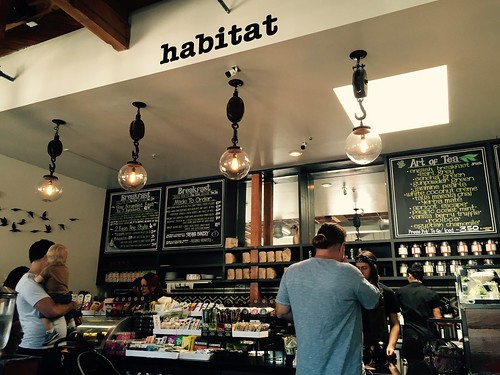
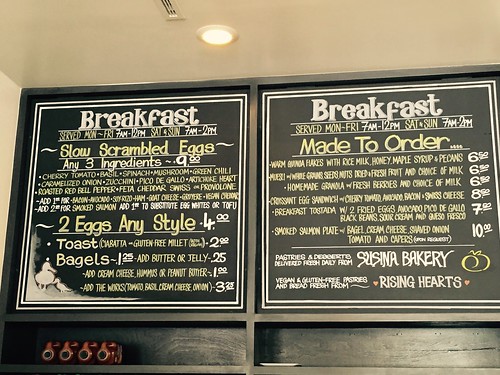

Although we are a fully functioning coffee shop, for legal reasons Dumb Starbucks needs to be categorized as a work of parody art. So, in the eyes of the law, our "coffee shop" is actually an art gallery and the "coffee" you're buying is considered the art. But that's for our lawyers to worry about."
It is an American tradition to poke fun at, criticize and imitate cultural and political icons. However, that tradition could get you sued. There is a defense in copyright cases called "fair use." Section 107 The Copyright Act of 1976 outlines what a court has to consider when determining if something is fair use:
1) Purpose and character of the work
2) Nature of the work
3) Amount and substantiality of the portion used in new work
4) Effect of the use upon the potential market for or value of the copyrighted work
What this means is courts go through four steps, the first of which is to look at whether the creator of the new work did it as social commentary or financial gain. Next, they look at whether it is parody, satire, criticism and if that purpose is obvious in the content. A judge will also consider how much of the original work is included, and whether the will hurt the present or future sales of the old work.
Kerusso told the Seattle Post-Intelligencer: “It’s interesting how many of our parodies do end up as best-sellers. I think people like the fact that they can get a little chuckle out of something and at the same time express their faith.”
While it may be a best seller, is it really parody? If so, it’s protected as free speech. If not, it’s trading on Starbucks’ goodwill. In the Ninth Circuit, “a true parody will be so obvious that a clear distinction is preserved between the source of the target and the source of the parody….” Dr. Seuss Enterprises, L.P. v. Penguin Books USA, Inc., 109 F.3d 1394, 1405 (9th Cir. 1997). Moreover, “[t]he claim of parody is no defense ‘where the purpose of the similarity is to capitalize on a famous mark’s popularity for the defendant’s own commercial use.’” Id. at 1406, quoting Hard Rock Cafe Licensing Corp. v. Pacific Graphics, Inc., 776 F.Supp. 1454, 1462 (W.D.Wash.1991).
As the Ninth Circuit later explained, “the book The Cat NOT in the Hat! borrowed Dr. Seuss’s trademarks and lyrics to get attention rather than to mock The Cat in the Hat! The defendant’s use of the Dr. Seuss trademarks and copyrighted works had no critical bearing on the substance or style of The Cat in the Hat!, and therefore could not claim First Amendment protection. Dr. Seuss recognized that, where an artistic work targets the original and does not merely borrow another’s property to get attention, First Amendment interests weigh more heavily in the balance.” Mattel, Inc. v. MCA Records, Inc., 296 F.3d 894, 901 (9th Cir. 2002).
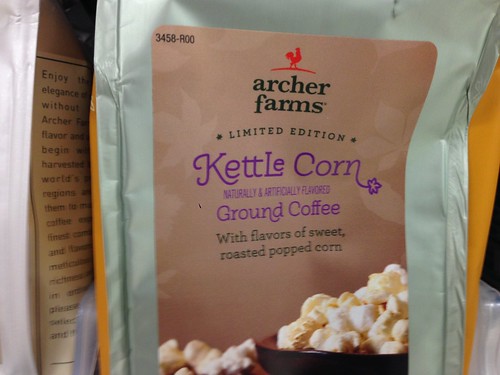
Given these authorities, Kerusso’s use of Starbucks’ mark appears mainly to get attention. It does not mock Starbucks or offer any comment on the company the mark represents; it merely makes use of the company’s familar trademark. Therefore, it probably is infringing (and dilutive) use.


Since the day I joined Dunkin’ Brands, one of the questions I’ve been asked most is, “When will Dunkin’ Donuts open in California?” I hear requests to come to California almost every day from our fans on the West Coast and all throughout the country, and of course from our passionate communities on Facebook and Twitter. Some big-name celebrities have even made pleas on national TV for us to bring our famous coffee to Hollywood.
And so, today is an extremely happy and momentous day for our brand, as I have the privilege of making the long-awaited announcement that Dunkin’ Donuts will in fact be expanding into Southern California. We are now actively seeking franchisees to open Dunkin’ Donuts restaurants in Los Angeles, Riverside, San Diego, San Bernadino, Ventura and Orange Counties in California. We expect the first new Dunkin’ Donuts restaurants in California to open in 2015.
We are absolutely thrilled to be coming to California. Expansion to the West Coast has always been part of our growth plans, and we’ve always said that we will enter California when the timing is right and when the infrastructure is in place to help our franchisees be successful. We believe we have reached that point today. It’s wonderful to know that there is already such incredible appetite for our brand in California, as evidenced by the popularity of our bagged coffee at grocery stores, the recent launch of Dunkin’ K-Cup packs at Baskin-Robbins shops throughout the state, and the overwhelmingly positive response to the opening of the Dunkin’ Donuts restaurant on Camp Pendleton.


Dunkin' Donuts plans to double its locations in the United States over the next 20 years, the company announced Wednesday.
The coffee and doughnut chain currently operates nearly 7,000 stores nationwide. Each new store adds an average of 20 to 25 new employees, both full and part-time a Dunkin spokeswoman said.
Dunkin' Donuts controls roughly 23% of the coffee and snack-shop market, according to Los Angeles-based industry research firm IBISWorld.


A few days ago, we listed 10 Places to Get a Damn Good Cup of Coffee. As many of you pointed out (passionately) in our comments, however, there are coffee shops not on the list that also make a great cup. And so, for your handy reference, we mapped L.A.'s best specialty coffee shops. The map includes the spots we highlighted, plus several others that didn't make the list. We made note of the shops that select and roast their own beans (those shops are in all caps), so if you want to drink local, you can.Check out the original "Top 10 Places to Get a Damn Cup of Coffee" feature here.


